
La primera pregunta de la segunda parte del Speaking será una descripción de una imagen que aparece en pantalla. A continuación, tendrás que responder a otras dos preguntas sobre el tema de la imagen. Para describir la foto y aprovechar al máximo esos 45 segundos, es vital aprender una estructura de memoria, que vaya desde lo más importante a lo menos importante.
Para empezar intentaremos, en la medida de lo posible, responder a las preguntas: ¿Quién?, ¿Qué está(n) haciendo? y ¿Dónde está(n)? en la misma frase, por ejemplo:
“In the photo/picture we can see a group of children playing football in the park”.
Si tu vocabulario es limitado, aprende las palabras “outdoor” (al aire libre) e “indoor” (bajo techo). Sería buena idea mencionar la edad: “kid” (niño), “teenager” (adolescente), “young adult” (joven), “adult” (adulto) y “old person” (persona mayor) y la posición: “standing” (de pie), “sitting” (sentado) o “lying” (tumbado), por ejemplo:
“There are 2 boys and 3 girls. They are teenagers. The boys are sitting on the floor while the girls are playing”.
Otra opción para hablar de la edad de alguien es suponer la década en la que se encuentra, siempre que tengan más de 20 años, por ejemplo:
“She is in her 30s” o “He is in his 40s”. Por último, es interesante usar el verbo “hold” (sujetar):
“One of the boys is holding the football”.
A continuación, nos centraremos en hablar de los sentimientos que las caras de las personas de la imagen expresan mediante la estructura “She looks + adjetivo” o “They look + adjetivo”, por ejemplo:
“The girl looks really excited and focused on the game while the boys look very tired”.
Si tienes poco vocabulario, aprende estos adjetivos: focused (concentrado), bored (aburrido), happy/excited (feliz), stressed (estresado), relaxed (relajado), sad (triste), moved (emocionado).
Si alguien parece feliz, es muy sencillo explicar el porqué:
“The kids look very happy because they are smiling”, “I think they are having a good time because they are smiling”.
Si no pudieran verse las caras, siempre podemos hacer una suposición:
“Although I can’t see his face, I guess he is happy and excited…”.
Si te atreves y quieres añadir complejidad, puedes hacer una suposición usando el verbo “guess” (suponer):
“I guess they are playing after school”, “I guess they are preparing for a competition.”
También podemos usar el verbo modal “might”:
“I guess she might be studying for an exam.”
Si nos sobrase tiempo, podemos hablar del resto de elementos de la imagen, como el fondo:
“In the background there are very tall buildings”,
o los lados:
“On the left/right, we can see some trees.”
Además, podríamos hablar de la ropa sin entrar en detalles:
“They are wearing informal/formal clothes.”
e incluso del clima:
“I think it’s summer because it’s very sunny and because they are wearing summer clothes.”
Echa un vistazo a los siguientes ejemplos:
Versión simple: “In this photo we can see a teacher indoors. She is standing. She looks happy because she is smiling. She is wearing informal clothes. We can see some students. In the background, we can see the classroom.”
Versión compleja: “In this photo we can see a young woman in a laboratory. She is standing and she looks happy because she is smiling. I guess she might be a science teacher and she is explaining something to her students. She is wearing clothes for the laboratory. In the background, we can see some laboratory equipment and in front of the teacher, we can see some students.”

Versión simple: “In this photo we can see a man outdoors. He is standing and he is working. He looks focused. He is wearing informal clothes. In the background, we can see some buildings and trees.”
Versión compleja: “In this photo we can see a man painting in the street. He is in his 40s and he is standing while holding a brush. He looks focused on the wall he is painting. I guess he might be covering a graffiti with white paint. He is wearing a yellow vest. In the background, we can see some trees and some buildings.”

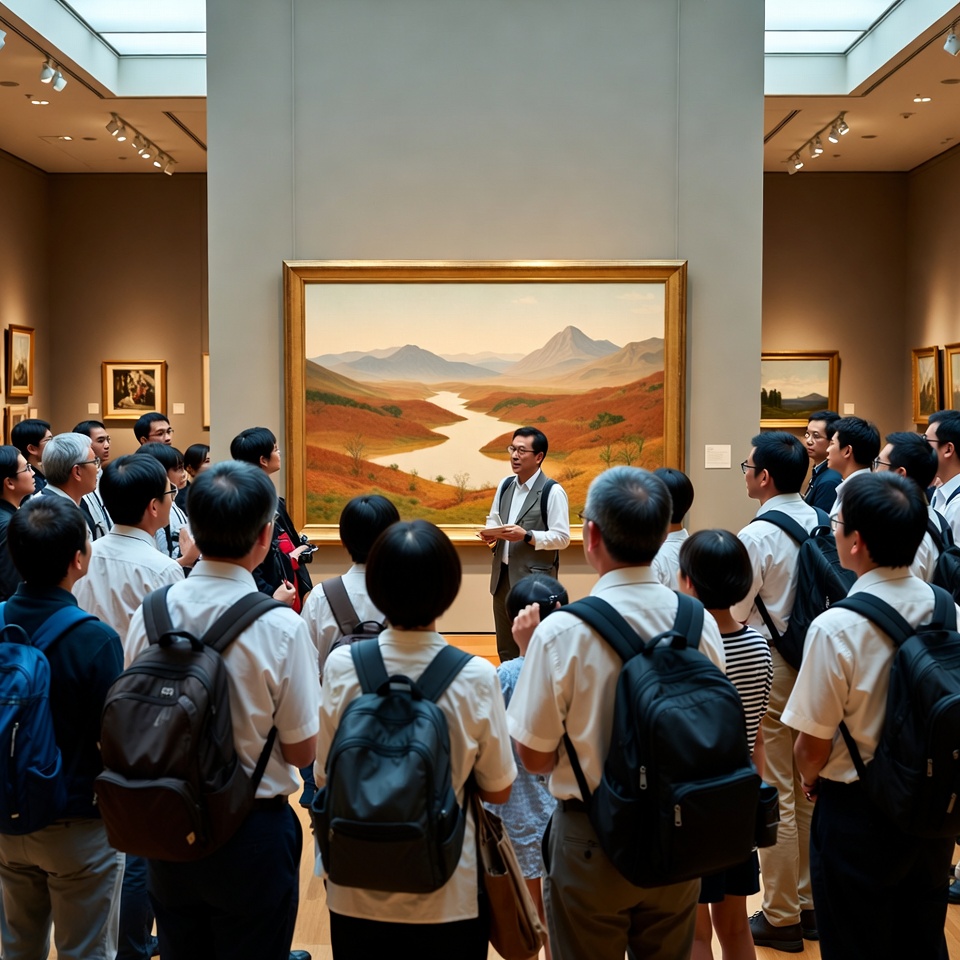
Versión simple: “In this photo we can see some people indoors. They are standing in front of a picture. In front of the people we can see a man. He looks focused. They are wearing casual clothes. In the background, we can see other pictures.”
Versión compleja: “In this photo we can see a group of people in a museum and a man explaining a painting of a landscape to them. They are standing. Although I can’t see their faces I guess they look focused on the man. I guess they might be tourists visiting a famous museum. In the background, we can see other pictures.”